Why Do Some Solar PV Systems Perform Better Than Others?
As the demand for renewable energy continues to grow globally, solar photovoltaic (PV) systems have emerged as one of the most accessible and scalable solutions for generating clean electricity. In Vietnam, solar energy projects have expanded rapidly across regions, making it crucial to evaluate the factors that influence the performance and success of these systems. Despite this growth, there has been limited local research exploring the real-world determinants of solar PV productivity. A recent study sought to fill this gap by identifying the primary factors that affect system performance and overall project outcomes.
The research involved a comprehensive review of previous global studies and extensive surveys with experts in solar energy, project management, construction, and solar project investment in Vietnam. From more than 36 potential variables examined, several key influences stood out as crucial to solar PV system efficiency and effectiveness.
Environmental and Technical Influences on Solar PV Efficiency
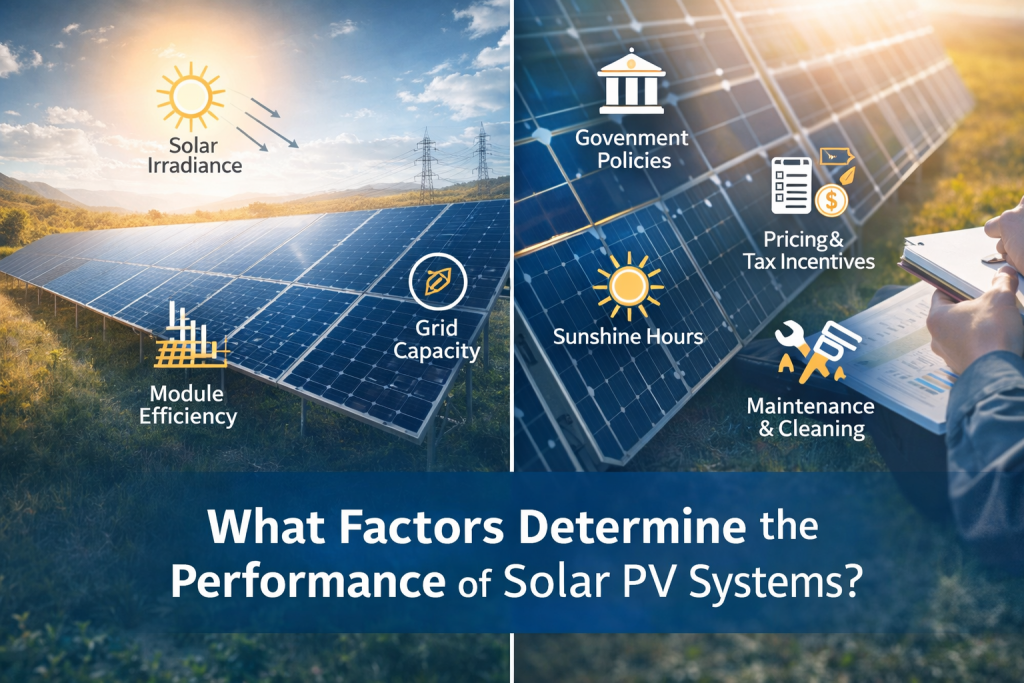
One of the most significant determinants of solar PV performance is the availability of sunlight and solar irradiance—the intensity of solar energy reaching the surface—which directly impacts how much electricity photovoltaic panels can generate. Regions with higher average daily sun hours tend to achieve better output. Furthermore, local grid capacity and infrastructure readiness can affect how effectively electricity is absorbed and utilized once produced, influencing overall project efficiency and return on investment.
Another critical technical factor is the energy conversion efficiency of the PV modules themselves. Even under optimal sunlight, a panel’s ability to convert solar radiation into electrical power depends on its design, materials, and manufacturing quality. Installation characteristics such as system orientation and tilt angle also play a role in ensuring maximum sun exposure throughout the day, while topographical features and altitude can influence both irradiance levels and environmental stress on equipment.
Policy, Economic, and Operational Drivers
Beyond natural conditions and technology parameters, government policies and incentives significantly affect solar PV adoption and performance outcomes. Pricing support, tax incentives, planning frameworks, and streamlined permitting processes can accelerate deployment and attract investment. In contrast, regulatory uncertainty or inadequate long-term incentives may slow project development and diminish economic returns.
Operational and economic factors also contribute. For example, ongoing maintenance practices and module cleaning help to reduce performance degradation caused by dust, dirt, or particulate buildup on panel surfaces, a widely documented issue in solar energy operation. Meanwhile, the number of sunshine hours per day and regional climate patterns directly affect annual power generation profiles.
Toward Smarter and More Resilient Solar Projects
Understanding these diverse influences allows engineers, policymakers, and investors to better design, optimize, and support solar PV systems tailored to local environmental and market conditions. With advances in both technology—such as improved panel efficiency and predictive analytics—and policy frameworks that encourage renewable energy adoption, solar PV has the potential to play a central role in sustainable energy strategies. As real-world implementation continues, the integration of data-driven insights with robust engineering will be key to achieving high performance and long-term system success.